


hs-CRP & FoodPrint® 200+ Bundle
Combining an hs-CRP test with a FoodPrint test can be a great tool to monitor the success of the recommended IgG elimination diet. We suggest an initial baseline test and a second test 3 months after dietary intervention strategies have been implemented. A reduced second test score may help to indicate the success of the recommended treatment protocol and help to motivate an individual to continue to follow the implemented lifestyle changes.
If the score remains high, or increases, a general practitioner referral may be suggested to establish the cause.
What's included:
- 207 foods tested
- hs-CRP inflammation analysis
- Home to lab sample collection packs (finger prick blood)
- Results in 5-10 working days
- 30-minute consultation with a qualified nutritionist to discuss your results
- Free 30-page support guide to help you make informed dietary choices

We’ll test 207 food reactions
The Foods We Test
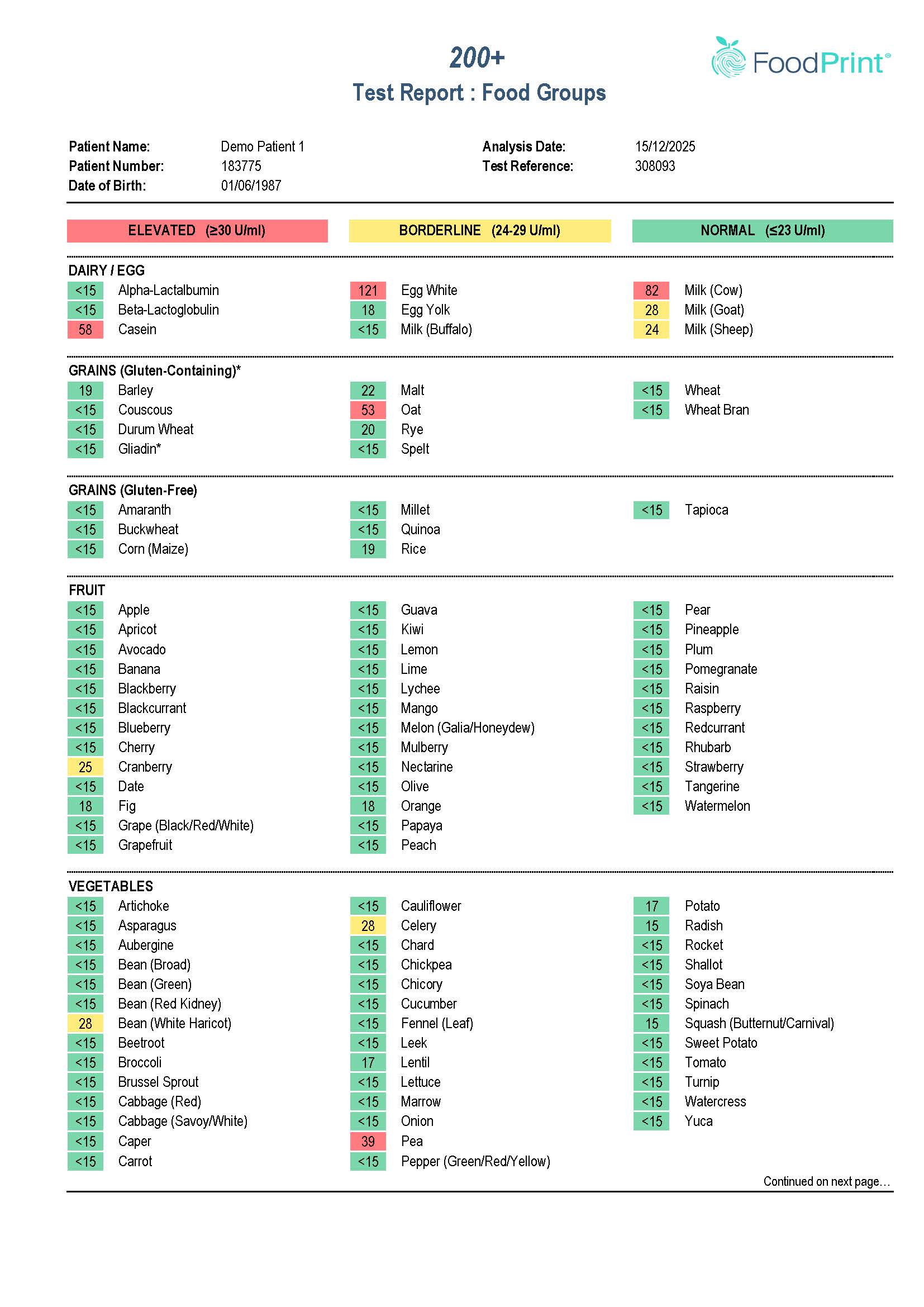
Our FoodPrint 200+ IgG food sensitivity test measures your body’s immune response to a wide range of foods. Here you can explore the full list of foods included in the test.
Testing made simple
From the moment you order, we guide you through a simple, supported process – with fast delivery, clear results, and a free consultation with a registered Nutritionist to help you take confident next steps.
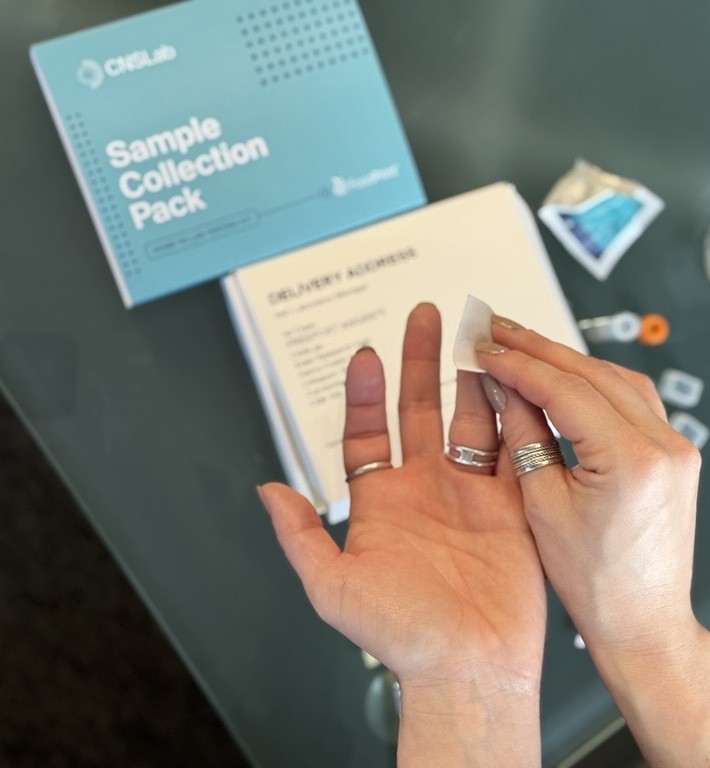
Take your blood sample at home
We’ll endeavour to process your order quickly and dispatch on the same day as your order (if received on a normal working day). Your pack arrives with everything you need, including simple step-by-step instructions. Our tests are quick and easy to use. Simply use the finger-prick tool to collect a small blood sample.

Post it back to our lab for analysis
Return your sample using the supplied pre-paid return packaging, and pop it into a post box or post office. Our lab will then test your IgG reactions to each food.

Get your results and chat them through
Within a few days we will email you with your results. Our comprehensive reports are simple to understand and use a traffic light system that indicates different levels of sensitivity. You can also book a free 30-minute call with one of our registered Nutritionists to help you understand your results and confidently plan your next steps – that’s all included in the price.
Find out more about hs-CRP test
What about…?
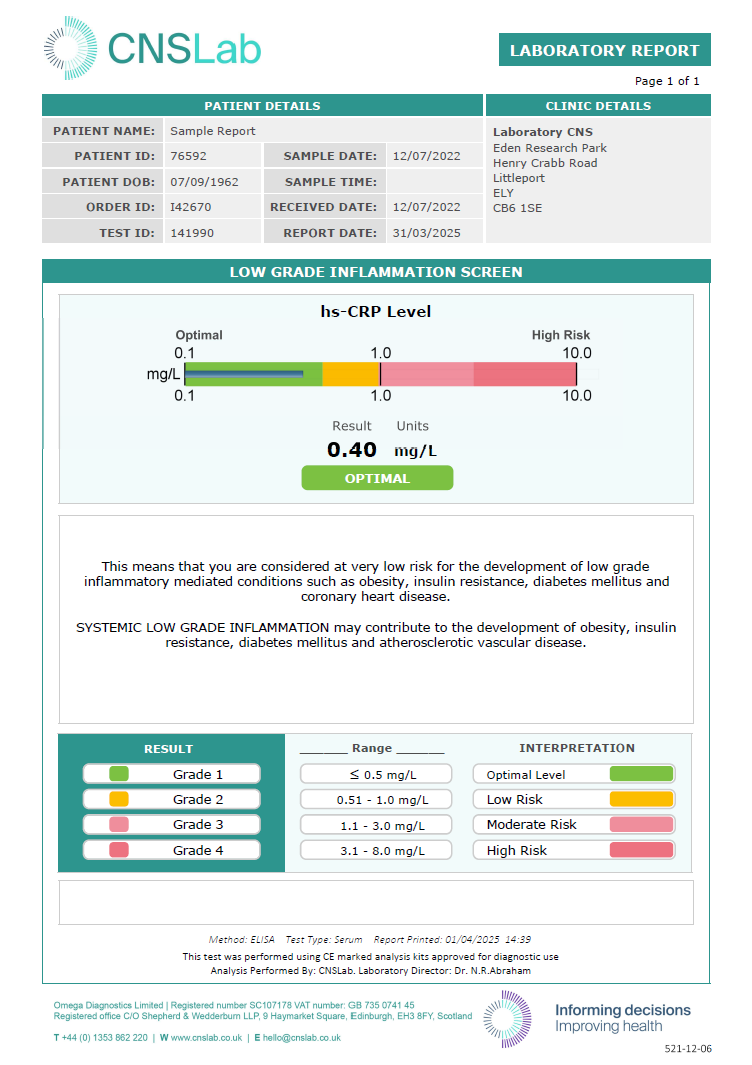
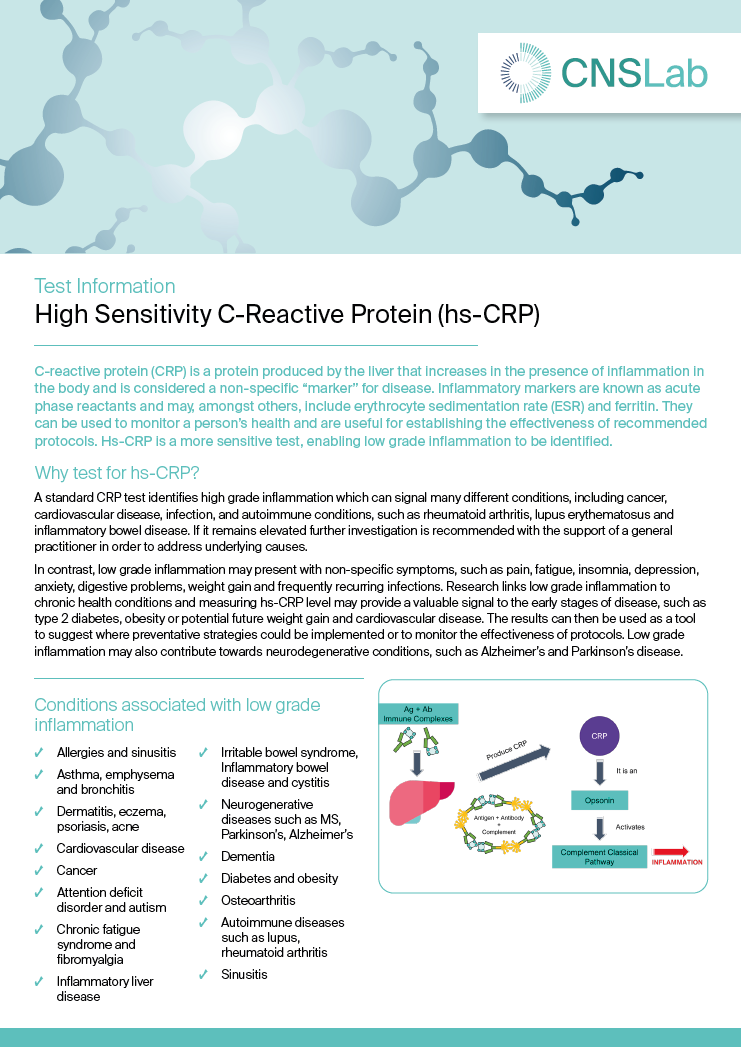
more FAQshs-CRP is a tool for assessing low grade inflammation. It is used medically to predict a healthy person’s risk of heart attack or other heart conditions as part of a cardiovascular profile. Those with hs-CRP results in the highest quartile have 2-4 times the risk of developing atherosclerosis compared to those in the lowest quartile. Within a functional medicine approach the test is used as a marker to identify the presence of low-grade inflammation and results can be used to monitor a person’s health establishing the effectiveness of recommended protocols.
High sensitivity C-reactive protein.
Some medications, such as statins and steroids, will affect your results. If possible, it is recommended to stop the use of asthma inhalers and topical steroid preparations 7 days prior to a test, but not without seeking medical advice first. Some NSAIDs such as naproxen and lumiracoxib may also affect results and high dose aspirin may lower CRP levels, although this has not been noted at lower levels. If your medication regime is constant, you may still choose to test the success of an anti-inflammatory dietary regime or an IgG elevated elimination diet.
Yes, evidence suggests that inflammation may result in response to elevated IgG food antibodies and a diet based on the elimination of foods showing the highest level of IgG antibodies may contribute to a reduction in inflammation. As such, comparing hs-CRP levels at the beginning and end of an exclusion programme, keeping all other variables such as medications and supplements constant, may be a useful tool to assess the success of an IgG elimination diet along with symptom improvement.
A single test will give you a baseline reading of hs-CRP levels, reflecting inflammation in the body at that time and, once lifestyle changes have been implemented, a further test can be used to monitor the effectiveness of the protocol. For example, in order to assess the effectiveness of an IgG based elimination dietary protocol, we recommend taking an initial baseline test at the beginning of your dietary programme and again after three months into the programme to assess progress. Please ensure all other variables such as supplements and medications are constant.
Low grade inflammation may contribute to obesity, insulin resistance, diabetes mellitus and atherosclerotic vascular disease.