


hs-CRP
Using a skin prick blood sample, this test is used to assess low grade levels of inflammation. The results can be used as a tool to suggest where preventative strategies may be implemented or to monitor the effectiveness of these strategies.

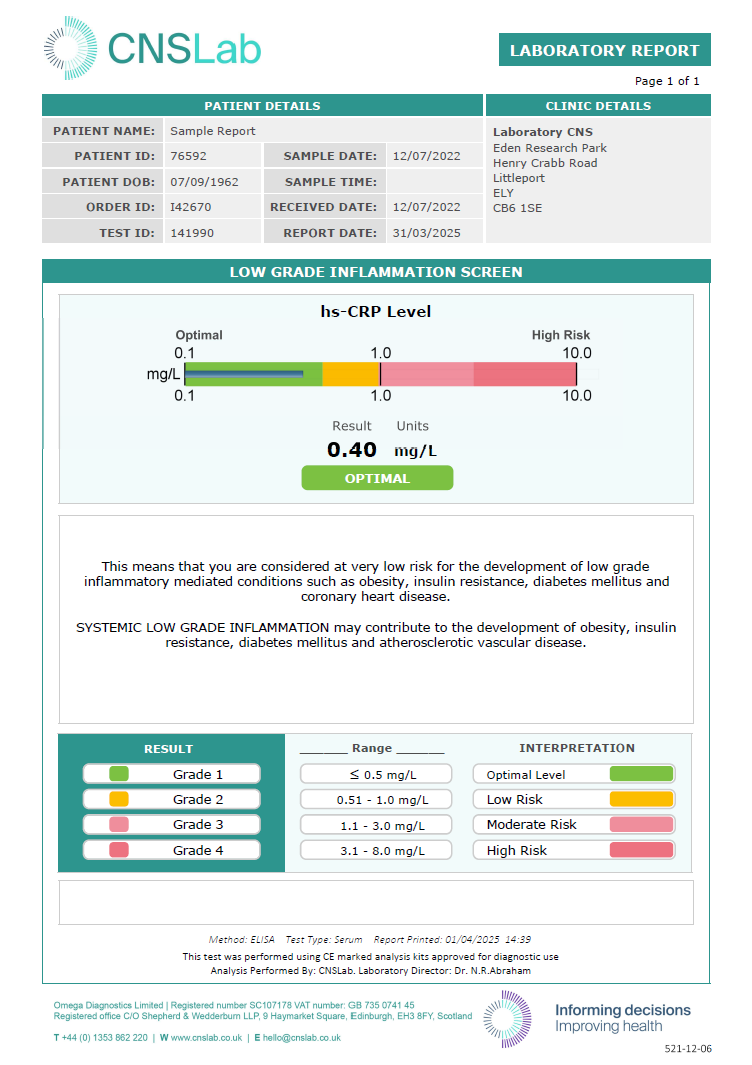
Curious to see how the results look?
Find out more about hs-CRP test
What about…?
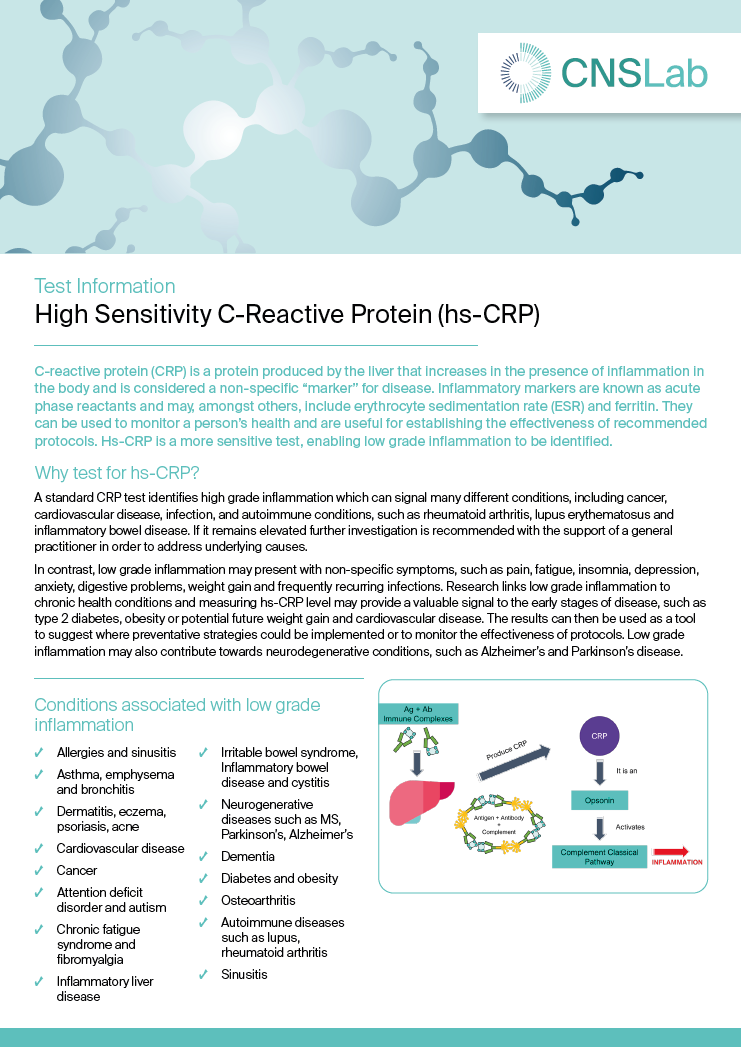
more FAQshs-CRP is a tool for assessing low grade inflammation. It is used medically to predict a healthy person’s risk of heart attack or other heart conditions as part of a cardiovascular profile. Those with hs-CRP results in the highest quartile have 2-4 times the risk of developing atherosclerosis compared to those in the lowest quartile. Within a functional medicine approach the test is used as a marker to identify the presence of low-grade inflammation and results can be used to monitor a person’s health establishing the effectiveness of recommended protocols.
High sensitivity C-reactive protein.
Some medications, such as statins and steroids, will affect your results. If possible, it is recommended to stop the use of asthma inhalers and topical steroid preparations 7 days prior to a test, but not without seeking medical advice first. Some NSAIDs such as naproxen and lumiracoxib may also affect results and high dose aspirin may lower CRP levels, although this has not been noted at lower levels. If your medication regime is constant, you may still choose to test the success of an anti-inflammatory dietary regime or an IgG elevated elimination diet.
Yes, evidence suggests that inflammation may result in response to elevated IgG food antibodies and a diet based on the elimination of foods showing the highest level of IgG antibodies may contribute to a reduction in inflammation. As such, comparing hs-CRP levels at the beginning and end of an exclusion programme, keeping all other variables such as medications and supplements constant, may be a useful tool to assess the success of an IgG elimination diet along with symptom improvement.
A single test will give you a baseline reading of hs-CRP levels, reflecting inflammation in the body at that time and, once lifestyle changes have been implemented, a further test can be used to monitor the effectiveness of the protocol. For example, in order to assess the effectiveness of an IgG based elimination dietary protocol, we recommend taking an initial baseline test at the beginning of your dietary programme and again after three months into the programme to assess progress. Please ensure all other variables such as supplements and medications are constant.
Low grade inflammation may contribute to obesity, insulin resistance, diabetes mellitus and atherosclerotic vascular disease.